

Trusted by over 10,000 businesses





People love their vacation - don't mess
it up.
Miscommunication about leave can lead to all kinds of ugly issues like no-shows, understaffing, and payroll errors. You don’t have time for any of that. Manage time off automatically, in one place, with a mobile-first system designed for shift workers.
Import balances and
set accrual rates
Transfer and sync leave balances from another HR system, or start fresh and set accrual rates to automatically track time off for anyone, on any team.
Request leave via
mobile device
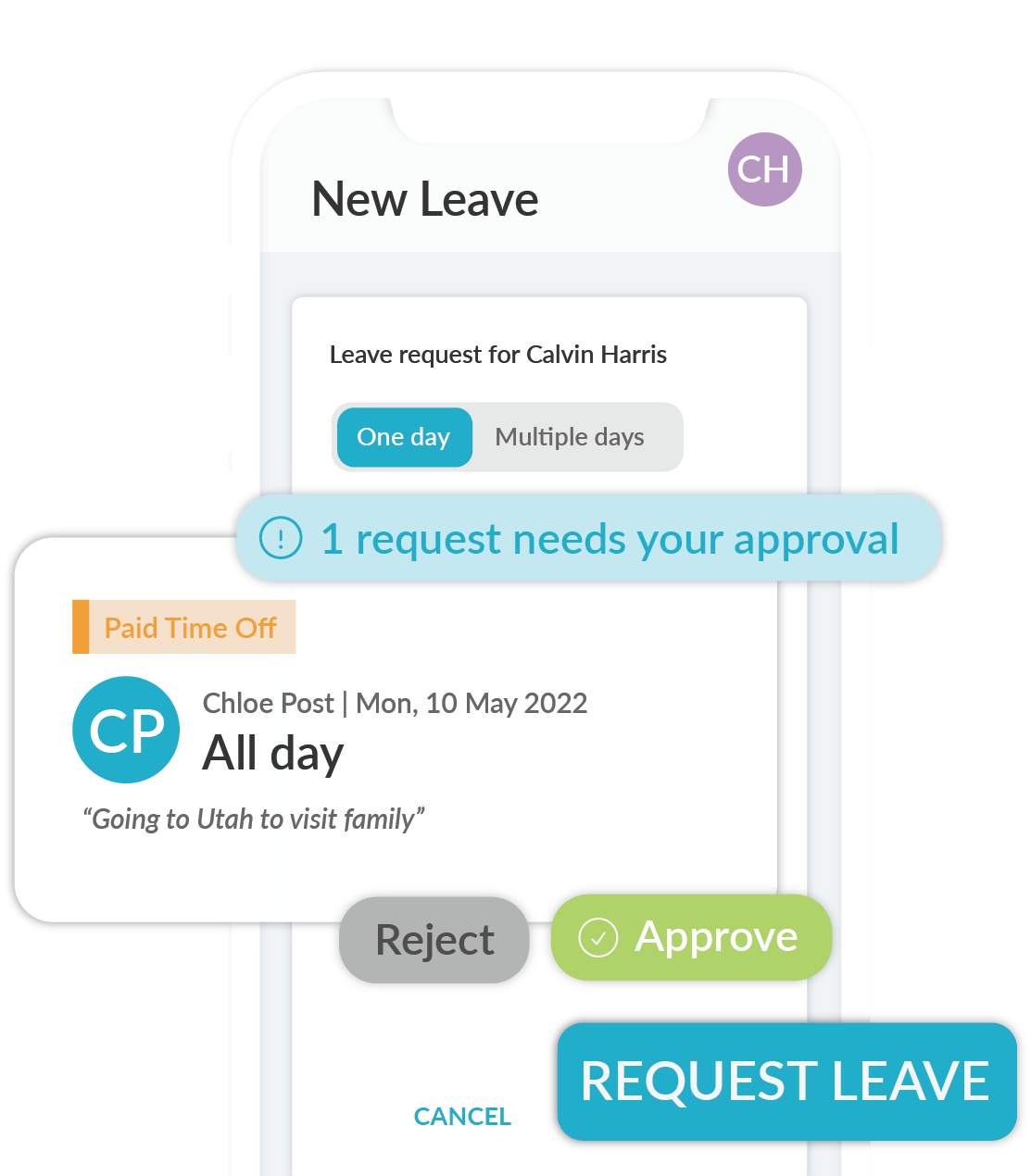
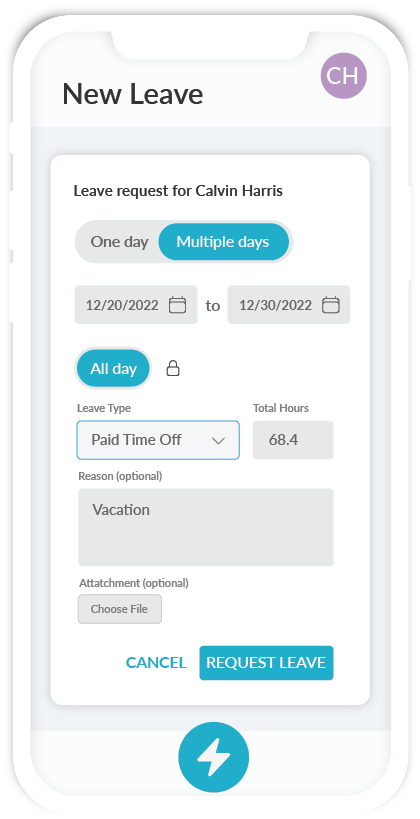
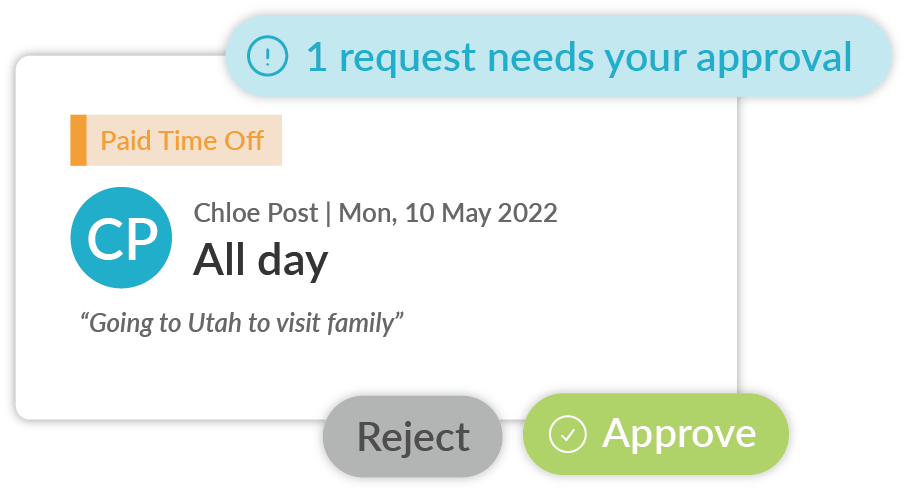
Employees can easily submit PTO by day or hour. Managers are alerted via email or in-app notification, and can approve or decline while giving a reason.
Review past and upcoming time off
View an audit trail of approved and declined requests, and check the calendar to know where and when employees are taking PTO next.
Apply leave to timesheets
Time off hours are automatically applied to employee timesheets for cleaner and more accurate payroll.
Mobile-first for shift work
-
Streamline how shift workers request time off by skipping the desktop – they don’t have time for it. Right from their pocket, employees can view their available and current hours and submit whatever kind of leave they need without keeping them from their daily duties. All of this ensures operations run smoothly and employees stay engaged so that your staffing needs are met.
Increase transparency across your workforce
-
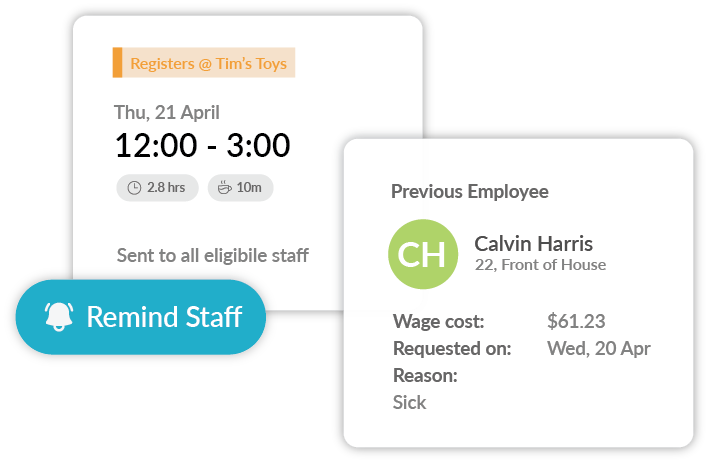
When it comes to time off, everyone needs to be on the same page to avoid missed shifts. Approve, decline, and view upcoming leave on a real-time calendar to know exactly where and when people are unavailable, preventing miscommunication and understaffed situations.
Leave policies tailored to your business
-
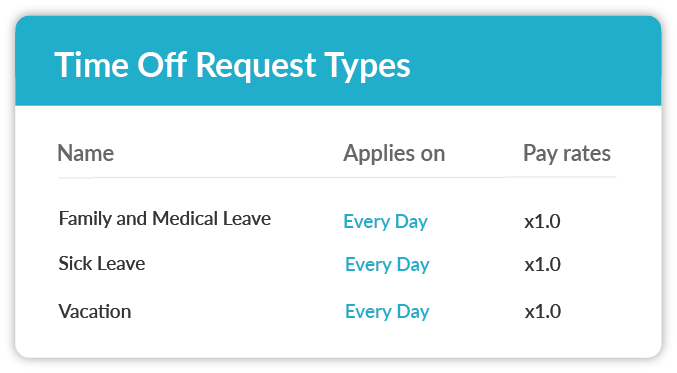
Configure your very own PTO policies and set various accrual rates according to team and role. Customizable time off management like this gives you the flexibility you need to respond to changing employment standards and staff sentiments.
Simple self-service for less admin work
-
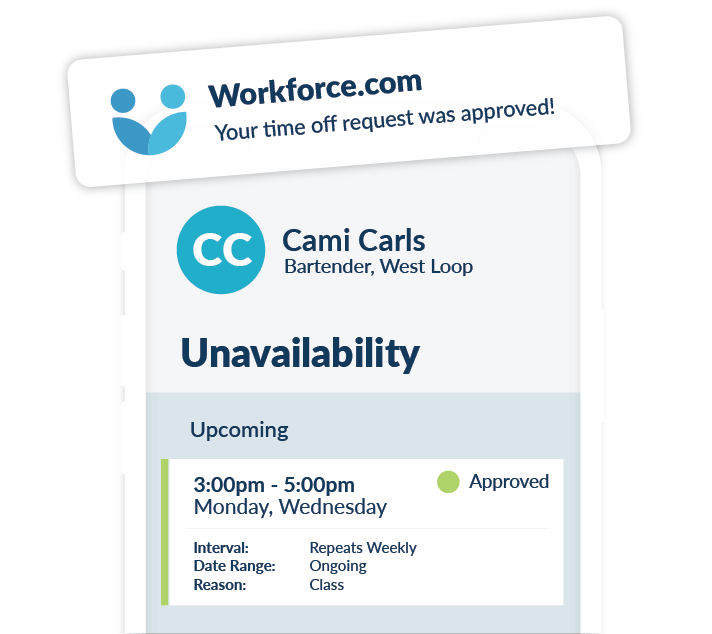
Everyone needs frictionless access to their PTO - get them there with mobile self-service. Employees can set unavailability, view projected PTO balances on future dates, and check available vs. current hours. All of this helps your staff make more informed decisions that reduce HR’s workload.
Get more from your PTO tracking
-
Leave management does not exist in a void. By syncing it with scheduling and attendance, you gain better insight into who’s off and for how long; this helps you prevent short-staffed situations and ensures you always pay staff what they're owed.
Still have questions? Want to learn more? Schedule a time with one of our product specialists.
Frequently Asked Questions
How much does Workforce.com cost for PTO tracking?
PTO tracking is built into Workforce.com's all-in-one workforce management platform. Pricing varies by business size and needs, so you'll need to request a quote through our pricing page.
Can I use Workforce.com's PTO tracking on any device?
Yes! Workforce.com is cloud-based, so you can use it on desktops, tablets, or mobile devices. Managers typically use the desktop version to view and approve employee PTO requests, while employees use the iOS and Android mobile apps to request leave and check their balances. However, employees can also log in to the desktop version if needed.
What is paid time off (PTO)?
It's time off from work paid at an employee's regular rate of pay. A PTO policy can take the form of a single bank of hours from which an employee can take, or PTO can be broken into categories, including sick leave, vacation time, bereavement leave, and maternity/paternity leave.
How many vacation days do employees get?
Most employers offer 10-14 vacation days a year on average. This usually increases the longer an employee remains with a company. This, of course, is only the standard and not a requirement. You should decide on a time-off policy that works best for your company and aligns with labor laws.
How do I track leave requests?
The most effective way to track leave requests is to give employees access to a mobile app that lets them submit time off directly to a centralized leave management system. Relying on spreadsheets, emails, or word of mouth quickly leads to mistakes and missed requests. Even with a small team, it's best practice to use software that automates time off tracking, ensuring every request is recorded, approved, and visible in one place.
Can PTO tracking software handle different accrual policies by role?
Yes. A good PTO tracking system should support multiple accrual policies and automatically apply them based on an employee's role. This ensures time off is calculated correctly every time a request is submitted, without managers needing to manually review or adjust balances.
How does PTO tracking software integrate with payroll systems?
Some platforms include PTO tracking as part of an all-in-one workforce management system, allowing leave data to sync automatically with payroll. Workforce.com is one example where PTO tracking is included out of the box.
When PTO and payroll are handled in separate systems, API integrations are typically used to maintain balance accuracy and ensure payroll calculations are accurate.
What mobile features should PTO tracking software include for employees?
Mobile features should focus on ease of use. Employees should be able to submit time-off requests and view their leave balances in just a few taps. At the same time, managers should be able to review and approve requests directly from the app, keeping approvals fast and accessible.
How does PTO tracking software prevent understaffing and scheduling conflicts?
PTO tracking software helps prevent understaffing by automatically recording approved time off and factoring it into employee schedules. This ensures managers only schedule available staff and avoid conflicts before they happen. For example, Workforce.com alerts managers if they try to schedule an employee who's already on approved leave.
Can PTO tracking software sync with scheduling systems?
Yes. PTO tracking software should sync with scheduling systems—ideally as part of a single, integrated platform. Because time off and schedules are closely linked, automatically accounting for approved leave helps prevent understaffing and avoid accidentally scheduling employees on PTO.
What sized businesses use Workforce.com's time off tracking software?
Anyone from a small business to a multinational enterprise can use Workforce.com! But typically, mid-sized companies with 50-10,000 staff use the platform.
How user-friendly is Workforce.com?
Workforce.com is designed for shift-based teams, so it's streamlined and easy to use from day one. Employees can request time off in the mobile app, while HR managers can review and approve requests on desktop or mobile. The platform is built to be simple and accessible for users at every level.