Save time and stick to budget with shift planning.
Build weekly shift plans and schedule the right employees to cut down on labour costs, call-outs, and admin time.
.png)

Trusted by businesses great and small










Shift planning built for hourly, shift-based teams
Spreadsheet rosters eat manager time and inflate labour costs through overstaffed quiet periods, understaffed rushes, and last-minute scrambles to cover call-outs. Workforce.com replaces the spreadsheet with a planning tool that matches shifts to forecasted demand, flags conflicts before you publish, and lets staff manage swaps from their phone.
Plan shifts around demand
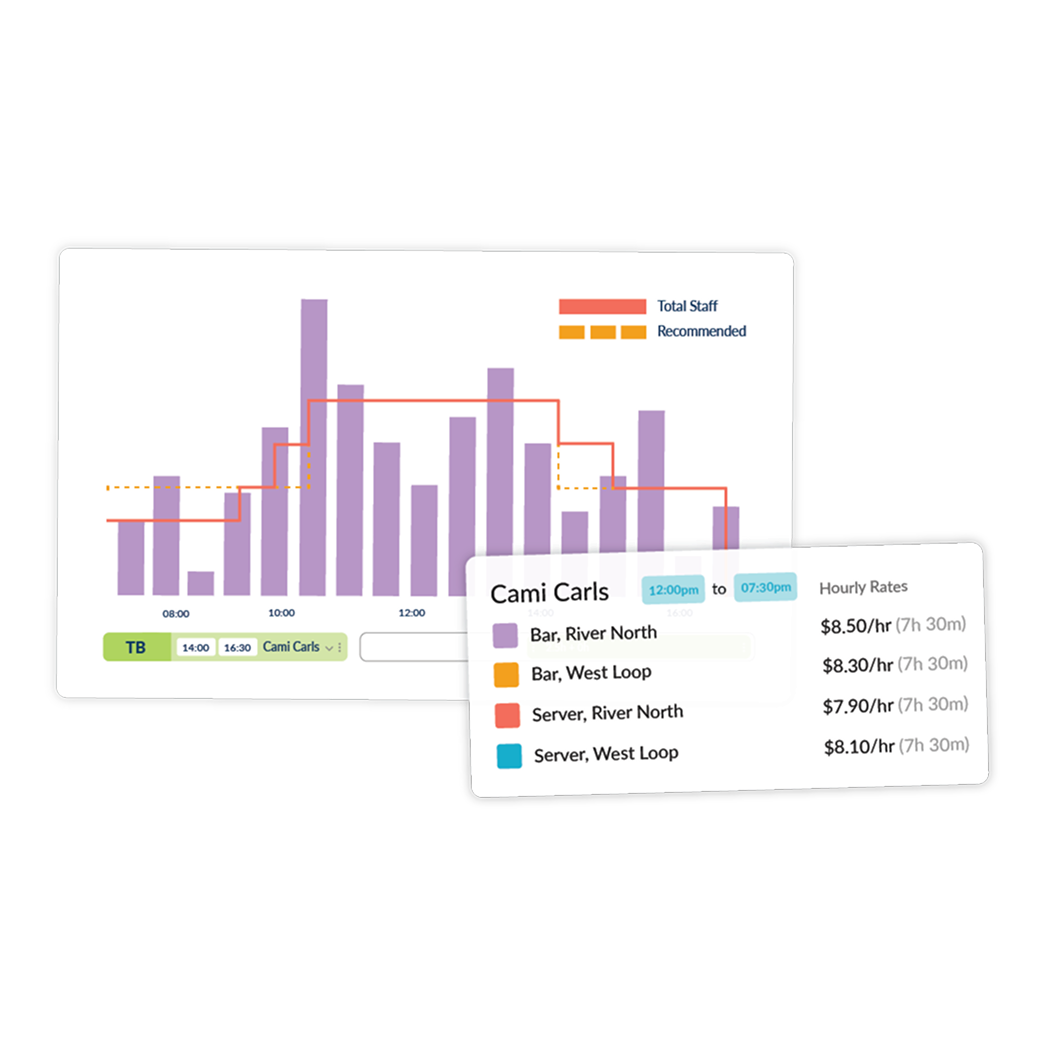
Forecast sales, foot traffic, and seasonal trends to work out how many shifts you actually need. Break demand down by team and location so you can see who and what role is needed for proper coverage, and watch shift costs and sales update in real time as you build.
Build a shift plan in one click
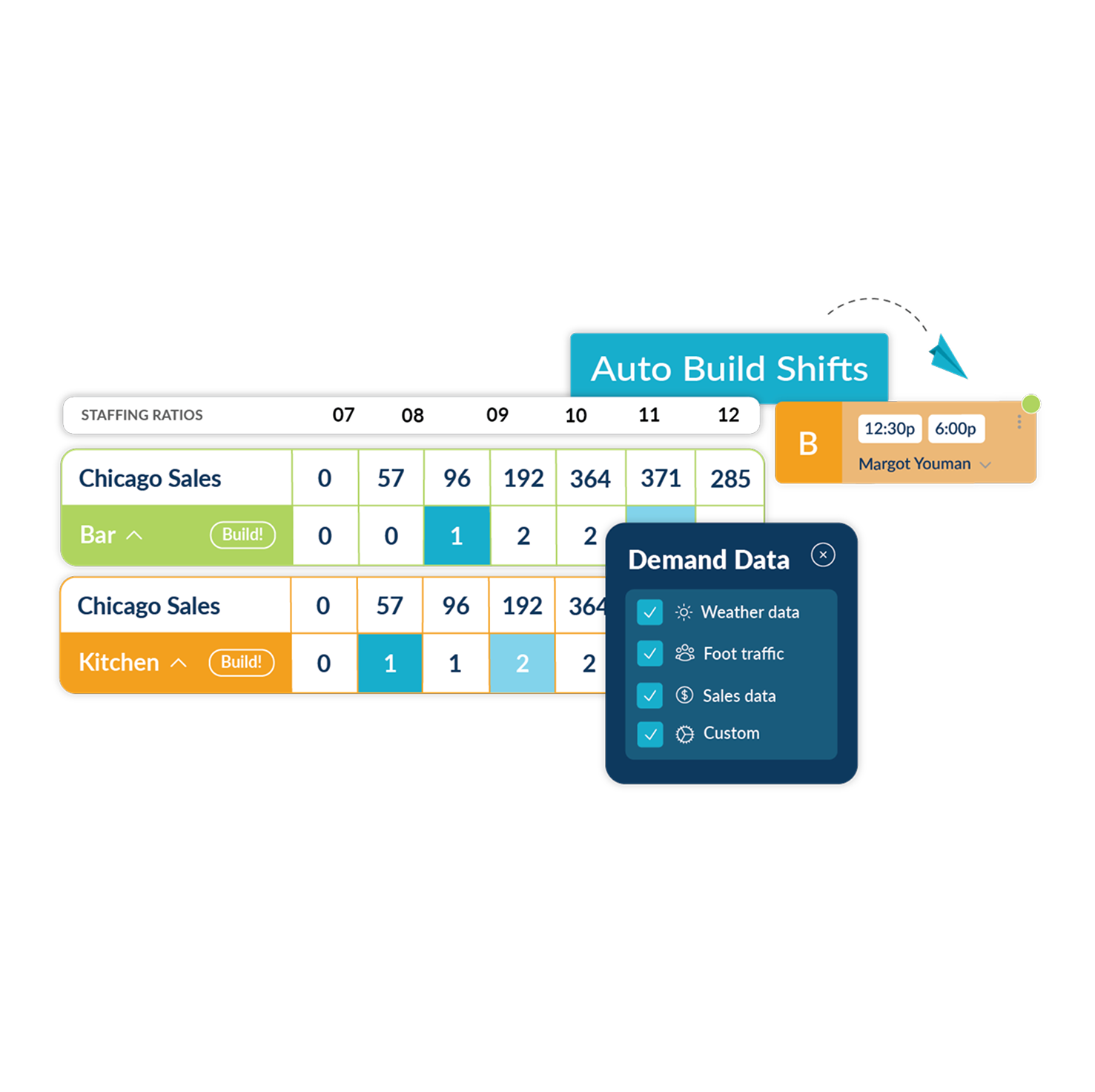
Populate weekly schedules automatically with machine learning that keeps wage costs in line and staffing levels accurate. Use saved shift patterns and templates to move faster, and let the system factor in unavailability, qualifications, and approved leave as it assigns shifts.
Quickly fill empty shifts
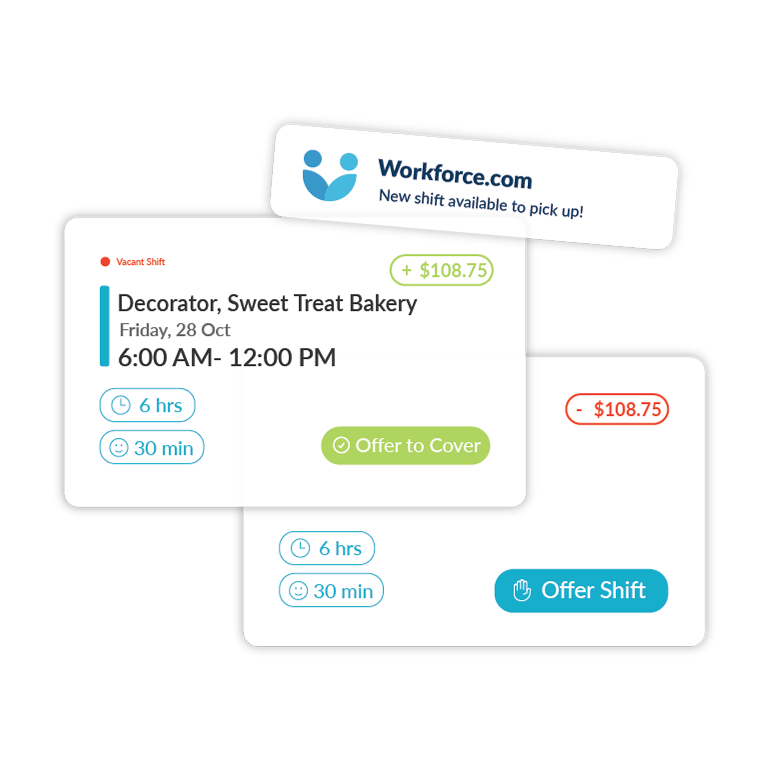
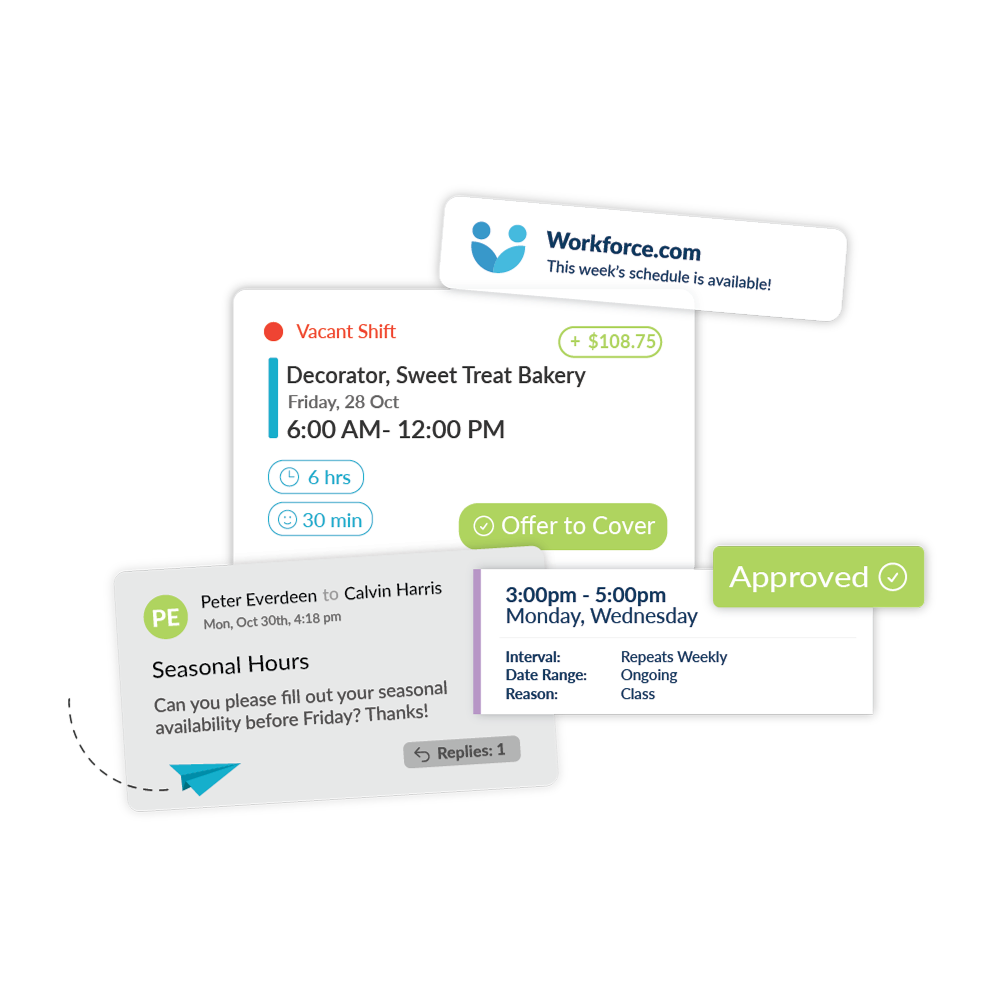
Post open shifts to all available, qualified staff and let them request pickups from their phone. Managers approve in a tap, and Workforce.com surfaces any conflicts with leave, unavailability, overtime, or existing shifts before the shift is reassigned.
Make meal and rest breaks easy
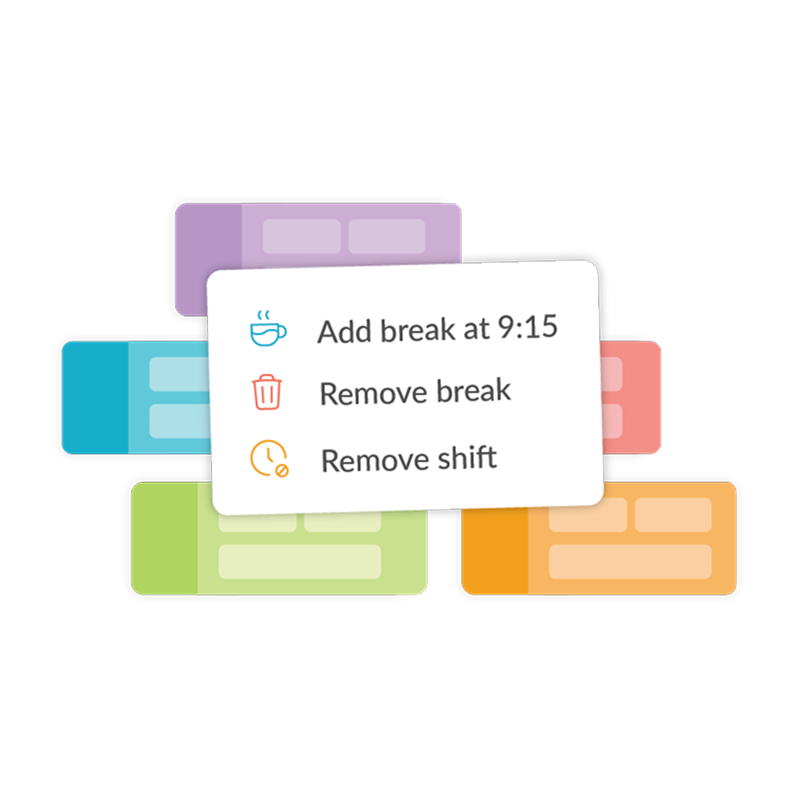
Automatically add compliant meal and rest breaks to every shift based on your province's employment standards. Set specific start and end times for each break, and get notified the moment an employee misses a break, starts one late, or ends one early.
Manage shifts from anywhere
Approve shift swaps, find replacements, and check staffing levels from the Workforce.com mobile app on iOS and Android. Post scheduling changes, add shift notes and reminders, and keep the whole team in the loop without needing to be at the back-office computer.


Consistent results for our customers
ROI total overall economic impact
Gain in scheduling efficiency
Decrease in customer labor costs
Increase in revenue per labour hour